Consumer Confidence Is Rising — But Americans Still Feel Broke. Here's Why.
The University of Michigan Consumer Sentiment Index hit its highest level since August 2025. But dig into the data and Americans are still worried about high prices and job security. Here's the disconnect.

John Mitchell
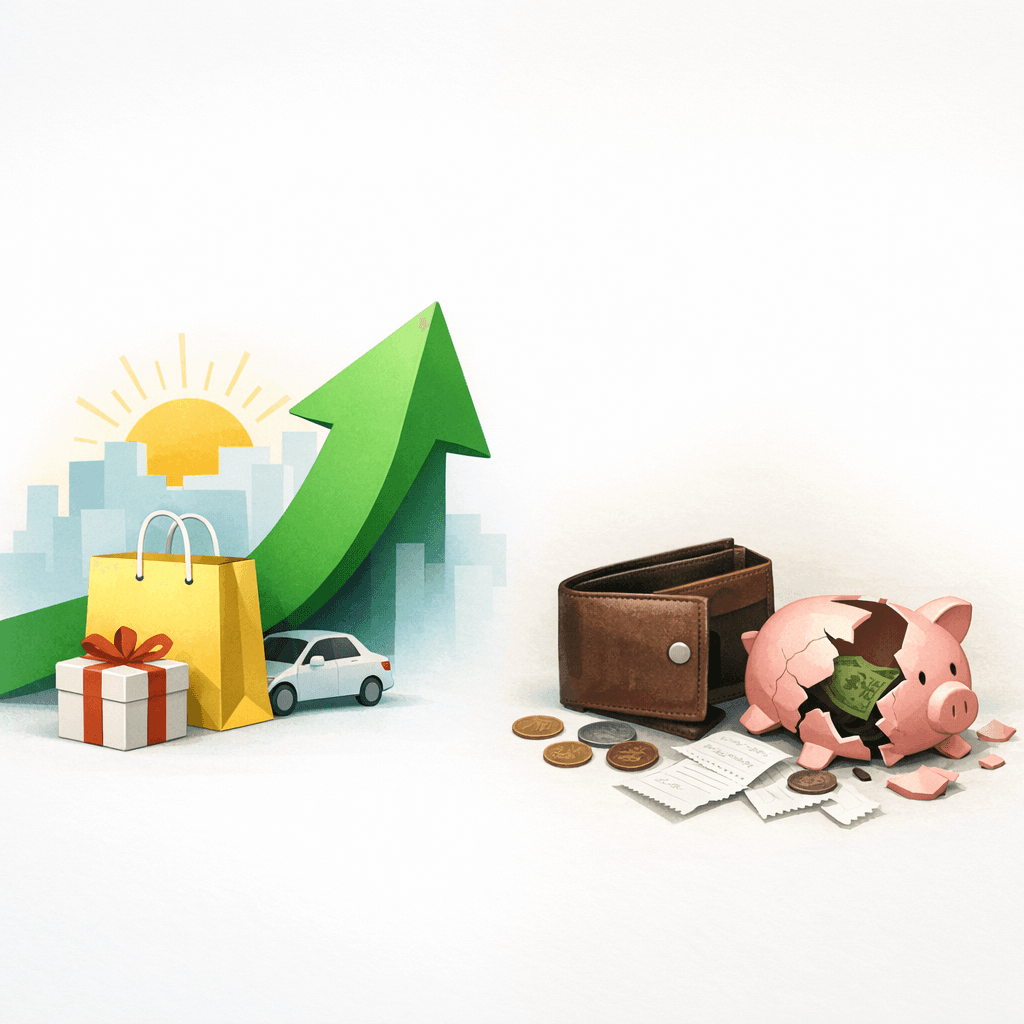
The University of Michigan just released its latest Consumer Sentiment Index, and the headline sounds great: 57.3 in February, beating expectations of 55 and hitting the highest level since August 2025.
So Americans are feeling good about the economy, right?
Not exactly. Dig into the details and you'll find a population still anxious about high prices, worried about losing their jobs, and far from confident about their personal finances. The "improvement" is barely above the margin of error — and the overall level remains historically low.
Let's unpack what this actually means.
What the Numbers Show
The Consumer Sentiment Index, published monthly by the University of Michigan, measures how Americans feel about their current financial situation and expectations for the future. Higher numbers mean more optimism; lower numbers mean pessimism.
Here's the February 2026 reading in context:
| Period | Reading |
|---|---|
| February 2026 | 57.3 |
| January 2026 | 55.0 (est.) |
| August 2025 | ~58 |
| Pre-pandemic (2019) | 95-100 |
| Great Recession low (2008) | ~55 |
Yes, you're reading that right. Current consumer sentiment is roughly where it was during the worst of the 2008 financial crisis. The "improvement" we're celebrating is basically margin-of-error noise.
Why Americans Still Feel Broke
Surveys of Consumers Director Joanne Hsu didn't sugarcoat it. According to her commentary on the February data:
"Concerns about the erosion of personal finances from high prices and elevated risk of job loss continue to be widespread."
Let's break down the two big worries:
1. Prices Are Still Too High
Inflation has come down from its 2022-2023 peaks, but that doesn't mean prices have dropped. They've just stopped rising as fast. For everyday Americans, the damage is already done:
- Groceries are up roughly 25% since 2020
- Rent has increased 20-30% in many markets
- Car insurance, utilities, and healthcare costs continue climbing
When your paycheck buys less than it did three years ago, it doesn't matter that the rate of increase has slowed. You're still underwater.
2. Job Security Feels Shaky
The labor market is clearly cooling. This week's data tells the story:
- ADP reported only 22,000 private-sector jobs added in January — a dramatic slowdown
- Professional and business services lost 57,000 jobs
- Manufacturing shed 8,000 positions
- The official BLS jobs report was delayed by the government shutdown, leaving everyone guessing
When you're seeing layoff headlines and slower hiring, even employed workers get nervous. That anxiety shows up in sentiment surveys.
The Disconnect Between Wall Street and Main Street
Here's the weird part: the Dow just hit 50,000. The stock market is at all-time highs. Corporate profits are solid. By traditional measures, the economy is doing fine.
So why do regular people feel so gloomy?
Asset ownership is unequal. The top 10% of Americans own about 93% of stocks. When the Dow hits records, most people don't feel it directly. But when grocery prices spike, everyone feels it.
Wage growth hasn't kept up. Wages are up 4.5% year-over-year according to ADP — but that barely covers inflation, and it doesn't make up for the cumulative price increases since 2020.
Housing is broken. Mortgage rates around 6.2% plus record-high home prices have locked an entire generation out of homeownership. That's a huge drag on financial optimism.
What This Means for You
If you're feeling stretched financially: You're not imagining it. The data backs you up. Prices really are higher, job security really is shakier, and the economic "good news" in the headlines largely benefits people who already have assets.
If you're trying to make financial decisions: Don't wait for the economy to "feel better" before getting your house in order. Build that emergency fund now, while you're still employed. Cut expenses where you can. The cooling job market means layoffs could accelerate.
If you're investing: Consumer sentiment is a lagging indicator — it tells you how people felt recently, not where things are going. The disconnect between sentiment and stock prices can persist for a long time. Don't make investment decisions based on vibes.
The Bottom Line
Consumer confidence is technically up, but Americans aren't fooled. High prices and job worries remain the dominant themes, and a reading of 57 is still historically terrible.
When the "good news" is that we're slightly less pessimistic than last month, you know we're not out of the woods yet.
Sources: University of Michigan Surveys of Consumers, Reuters/Bitcoin Ethereum News, ADP National Employment Report. Data as of February 2026.
Continue Reading
More from Budgeting
 Budgeting
December Retail Sales Came in Flat — Here's What That Means for the Economy
The Census Bureau's delayed December retail sales report missed expectations, raising questions about consumer strength heading into 2026. Here's what it means for your wallet and the broader economy.
 John Mitchell
 Budgeting
When Will You Get Your 2026 Tax Refund? IRS Delays Could Slow Things Down
Tax season is here, but IRS staffing cuts and the government shutdown could delay your refund. Here's when to realistically expect your money and how to check your status.
John Mitchell Budgeting
Trump's Tariffs at One Year: What They're Really Costing You
Trump's tariffs hit their one-year anniversary. Studies show American consumers pay 96% of the cost — not foreign exporters. Here's how much they're adding to your bills and what the Supreme Court might do about it.
John Mitchell Budgeting
Jobless Claims Jump to 231,000 — Should You Be Worried?
Weekly unemployment claims jumped 22,000 to 231,000 — the biggest increase in two months. But economists say the labor market is still stable. Here's what's really happening.
John MitchellYou May Also Find Interesting
 Investing
China Tells Banks to Cut US Treasury Holdings: What It Means for American Investors
Chinese regulators are urging banks to reduce their US Treasury exposure. Here's what this trend means for interest rates, the dollar, and your portfolio.
John Mitchell Investing
How to Start Investing With $100 (A Beginner's Guide for 2026)
You don't need thousands to start investing. With just $100 and a smartphone, you can begin building wealth today. Here's exactly how to do it step by step.
John Mitchell Retirement
401(k) Basics: Everything You Need to Know in 2026
Your employer offers a 401(k). Should you use it? How much should you contribute? What's a match? Here's the complete beginner's guide to the retirement account that could make you a millionaire.
John Mitchell Investing
Dow Hits 50,000 for the First Time — What It Means for Your Portfolio
The Dow Jones Industrial Average closed above 50,000 for the first time in history on Friday. Here's what drove the rally and what this milestone actually means for everyday investors.
John Mitchell