China Tells Banks to Cut US Treasury Holdings: What It Means for American Investors
Chinese regulators are urging banks to reduce their US Treasury exposure. Here's what this trend means for interest rates, the dollar, and your portfolio.

John Mitchell
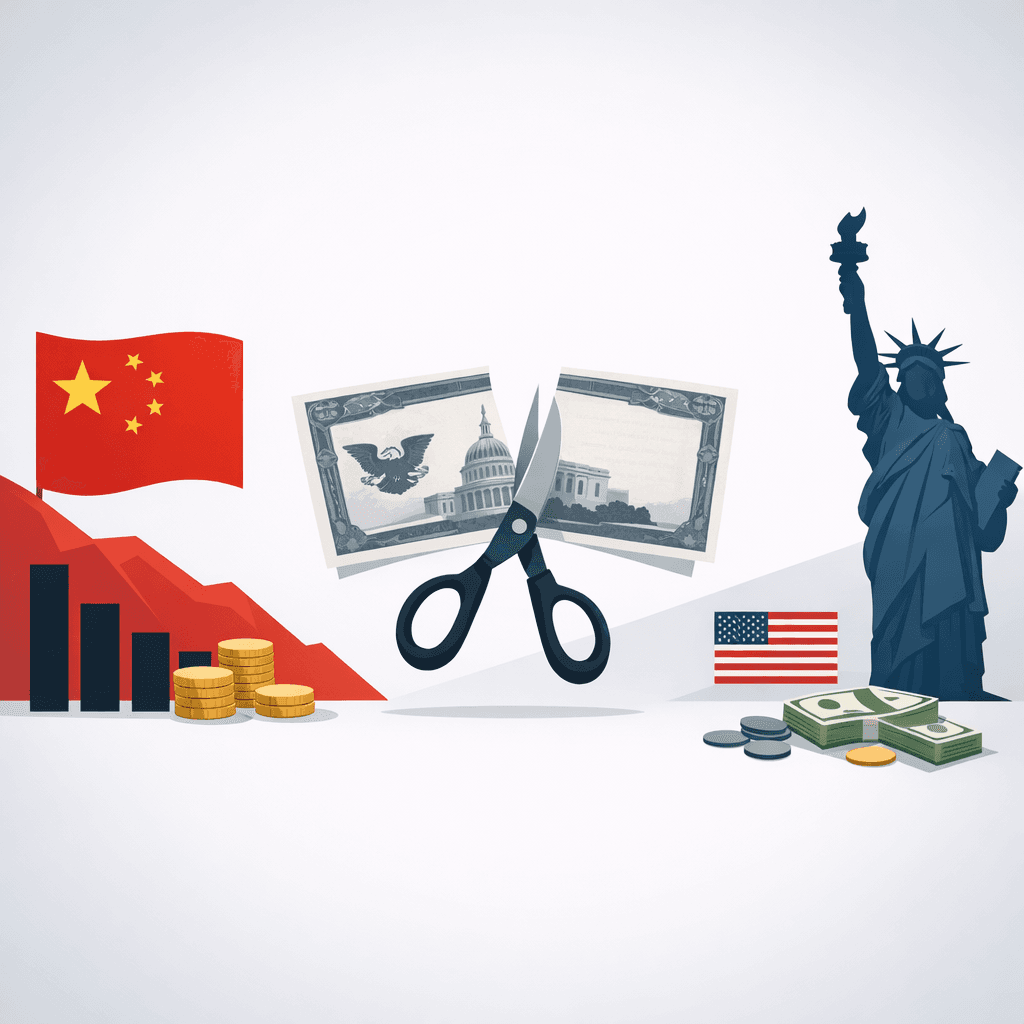
In a move that's raising eyebrows on Wall Street, Chinese regulators have advised financial institutions to limit their holdings of U.S. Treasury bonds. The news, reported by Bloomberg on Monday, cites concerns about market volatility and concentration risk.
While China's commercial banks aren't major players in the Treasury market compared to official reserves, the guidance signals a broader trend: BRIC nations (Brazil, Russia, India, China) are quietly stepping back from American debt.
For everyday investors, this isn't a reason to panic—but it is a development worth understanding.
What's Actually Happening
According to Fortune's reporting, China and Hong Kong together hold about $938 billion in U.S. Treasuries as of last November. That makes China the third-largest foreign holder of American debt, behind Japan and the UK.
The latest Treasury data shows a clear trend among BRIC nations:
| Country | Nov 2024 Holdings | Nov 2025 Holdings | Change |
|---|---|---|---|
| Brazil | $229 billion | $168 billion | -$61B |
| India | $234 billion | $186.5 billion | -$47.5B |
| China | $767 billion | $888.5 billion | +$121.5B* |
*China's holdings actually increased through mid-2025 before declining from a peak of $900+ billion.
The pattern is clear: these countries are reducing their exposure to U.S. government debt. According to ING's global head of markets Chris Turner, BRIC countries are "quietly leaving the Treasury market."
Why China Is Doing This
Several factors are driving the shift:
1. Geopolitical tensions The relationship between Washington and Beijing remains strained. With tariffs and trade disputes ongoing, China has strategic reasons to reduce its dependence on dollar-denominated assets.
2. Currency management By selling Treasuries and buying yuan, China can support its own currency while putting pressure on the dollar. It's a two-for-one move.
3. Diversification Like any investor, China doesn't want all its eggs in one basket. The country has been steadily increasing its gold reserves while reducing Treasury exposure—a shift toward assets that don't depend on U.S. policy.
4. Volatility concerns The official explanation cites "market volatility and concentration risk." Treasury yields have been choppy, and holding massive amounts of any single asset creates exposure.
What This Means for Interest Rates
Here's where it gets relevant for your wallet.
When foreign buyers reduce their appetite for Treasuries, the U.S. government has to offer higher yields to attract other buyers. More supply, same or less demand = higher interest rates.
That said, there are important caveats:
Private sector is stepping up. As ING noted, "this year has shown that the private sector is more than willing to buy Treasuries." Institutional investors, pension funds, and individual buyers have absorbed the slack from foreign sellers.
Japan still holds the most. Japan owns nearly double China's Treasury holdings. The UK holds about $888 billion. A shift from China matters, but it's not the whole picture.
No fire sale happening. Nobody is dumping Treasuries en masse. This is gradual repositioning, not a crisis.
UBS economist Paul Donovan put it in perspective: "China's banks are not major players in the U.S. Treasury market. Nonetheless, the idea that international investors may be less inclined to buy U.S. Treasuries in the future (without dumping existing holdings) is getting attention in markets."
Should You Worry About Your Bonds?
If you own Treasury bonds or bond funds, here's the honest assessment:
Short-term impact: Minimal. Today's news isn't moving markets dramatically. The 10-year yield remains around 4.1%.
Medium-term consideration: If foreign demand continues declining, yields may drift higher over time. That's bad for existing bond prices (they move inversely to yields) but good for new bond buyers who lock in higher rates.
Long-term picture: The U.S. Treasury market is the deepest, most liquid bond market in the world. It's not going anywhere. But the era of foreign central banks being automatic buyers of American debt may be evolving.
The Bigger Picture: Dollar Dominance
This story is part of a larger narrative about "de-dollarization"—the gradual shift away from the U.S. dollar as the world's default reserve currency.
Is it happening? Slowly, yes. BRIC nations are trading more in their own currencies, building gold reserves, and reducing dollar exposure.
Is the dollar's dominance ending? Not anytime soon. As Oxford Economics CEO Innes McFee told Fortune: "The reality is there's no real evidence of capital outflows out of U.S. assets. What there is evidence of is that the rest of the world is hugely exposed to U.S. assets and historically much more exposed than it's ever been."
The Magnificent Seven tech stocks and AI boom have actually increased foreign investment in American equities. The selloff is specific to government debt, not American assets broadly.
What Smart Investors Should Do
1. Don't panic. This is a slow-moving trend, not a crisis. Markets aren't crashing.
2. Diversify your fixed income. If you're heavily concentrated in long-term Treasuries, consider TIPS (inflation-protected securities), shorter-duration bonds, or corporate bonds.
3. Watch yields, not headlines. The 10-year Treasury yield is your real-time indicator. If it starts climbing persistently above 4.5%, pay attention.
4. Consider I-Bonds. Series I savings bonds offer inflation protection and are backed by the U.S. government. They're limited to $10,000/year but provide genuine security.
5. Stay invested in stocks. Ironically, foreign money is still flowing into American equities. Don't let bond market noise scare you out of growth assets.
The Bottom Line
China's guidance to limit Treasury holdings is a signal, not a crisis. BRIC nations are gradually reducing their exposure to U.S. debt for a mix of geopolitical, economic, and diversification reasons.
For American investors, the practical impact is likely modest: potentially higher yields over time, which is actually beneficial if you're buying new bonds or holding cash in money market funds.
The U.S. Treasury market isn't going anywhere. But the free ride of unlimited foreign demand may be ending. That means the government—and by extension, taxpayers—may eventually pay more to service the national debt.
My take: I'm not losing sleep over this. The Treasury market has survived worse than China trimming its holdings. But it's another reason to stay diversified and not assume yesterday's trends will continue forever. The world is shifting, and your portfolio should be able to handle it.
Sources: Fortune, Bloomberg, ING Research, U.S. Treasury TIC Data. Data as of February 2026.
Continue Reading
More from Investing
 Investing
January CPI Inflation Report Coming Friday: What You Need to Know
The delayed January CPI report drops Friday with economists forecasting 2.5% annual inflation. Here's what it means for your money and the Fed's next move.
 John Mitchell
 Investing
The Stock Market Is Flashing a Warning Sign Last Seen During the Dot-Com Crash
The S&P 500's CAPE ratio just hit levels last seen in October 2000 — right before the dot-com crash. Here's what this valuation metric means and whether you should be worried.
John Mitchell Investing
Dow Hits 50,000 for the First Time — What It Means for Your Portfolio
The Dow Jones Industrial Average closed above 50,000 for the first time in history on Friday. Here's what drove the rally and what this milestone actually means for everyday investors.
John Mitchell Investing
Fed Holds Rates Steady, Trump Picks Kevin Warsh as Next Chair — What It Means for You
The Federal Reserve kept interest rates unchanged at 3.50%-3.75%, and Trump has nominated Kevin Warsh to replace Jerome Powell. Here's what this means for your mortgage, savings, and investments.
John MitchellYou May Also Find Interesting
 Retirement
401(k) Basics: Everything You Need to Know in 2026
Your employer offers a 401(k). Should you use it? How much should you contribute? What's a match? Here's the complete beginner's guide to the retirement account that could make you a millionaire.
John Mitchell Credit
What's a Good Credit Score? The Numbers That Actually Matter in 2026
Your credit score affects everything from mortgage rates to job applications. But what's actually "good"? Here's what the numbers mean and what lenders really look for in 2026.
John Mitchell Crypto
Bitcoin for Beginners: What You Need to Know in 2026
Curious about Bitcoin but confused by the jargon? Here's a plain-English guide to what Bitcoin is, how it works, and whether it belongs in your portfolio.
John Mitchell Real Estate
Rent vs. Buy in 2026: The Math That Actually Matters
Should you rent or buy a home in 2026? Forget the emotional arguments. Here's the actual financial math to help you make the right decision for your situation.
John Mitchell