The Stock Market Is Flashing a Warning Sign Last Seen During the Dot-Com Crash
The S&P 500's CAPE ratio just hit levels last seen in October 2000 — right before the dot-com crash. Here's what this valuation metric means and whether you should be worried.

John Mitchell
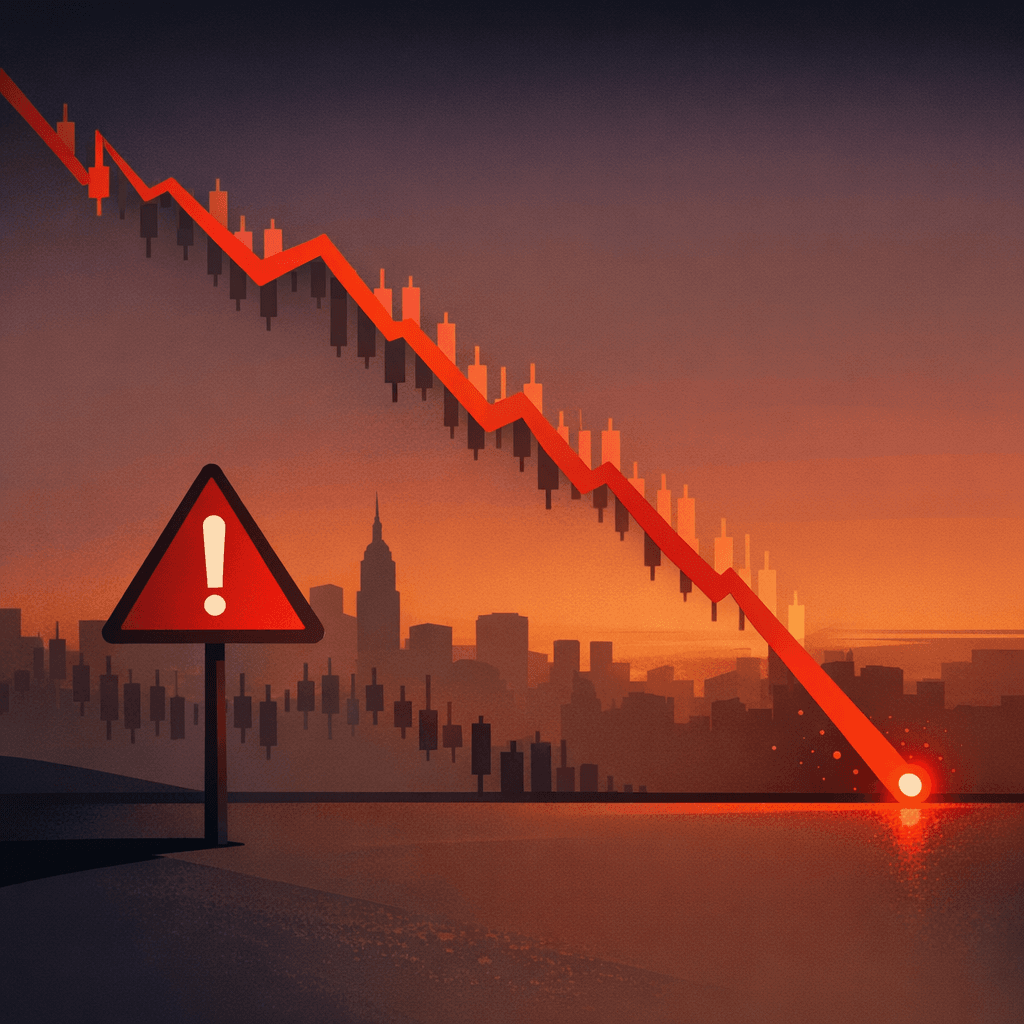
The Dow just hit 50,000. The S&P 500 is near all-time highs. Everything looks great, right?
Not so fast. A key valuation metric is flashing a warning that hasn't appeared since the dot-com bubble.
What Is the CAPE Ratio?
The CAPE ratio (Cyclically Adjusted Price-to-Earnings ratio), also called the Shiller P/E after Nobel laureate Robert Shiller, measures how expensive stocks are compared to their average earnings over the past 10 years, adjusted for inflation.
Unlike the regular P/E ratio, which only looks at one year of earnings, the CAPE smooths out business cycles and gives a better picture of whether the market is cheap or expensive compared to historical norms.
The long-term average CAPE for the S&P 500 is around 17. Higher numbers suggest the market is expensive. Lower numbers suggest it's cheap.
Where We Are Now
In January 2026, the S&P 500 recorded an average CAPE ratio of 39.9 — according to data from Multpl and Yale's Shiller database.
That's the fourth consecutive month above 39. And the last time the CAPE stayed above 39 for multiple months? October 2000 — right before the dot-com bubble burst.
What History Tells Us
When the CAPE ratio exceeds 39, history has not been kind to investors:
| Time Period | Average S&P 500 Return |
|---|---|
| 6 months | 0% |
| 1 year | -4% |
| 2 years | -20% |
These are averages, not guarantees. The worst 2-year return after a 39+ CAPE reading was -43%. The best was only +8%.
Why This Time Might Be Different (Or Not)
Bulls will argue this time is different because:
AI is driving real earnings growth. Unlike the dot-com era when companies had no profits, today's tech giants are printing money. Nvidia, Apple, Microsoft, and others are delivering genuine earnings that could justify higher valuations.
Interest rates are lower than the early 2000s. When rates are low, stocks become more attractive compared to bonds, potentially justifying higher P/E ratios.
The economy is still growing. GDP continues to expand, unemployment remains low, and corporate profits are expected to accelerate in 2026.
Bears will counter:
Tariffs are eating into profits. Trump's tariff policy has raised costs for businesses and consumers, which could slow economic growth and corporate earnings.
The Fed has less room to cut. If the market crashes, the Fed cannot slash rates as dramatically as it did in 2000 or 2008 because rates are already relatively low.
Concentration risk is extreme. A handful of mega-cap tech stocks are driving most of the gains. If they stumble, the whole market goes down.
What Should You Do?
The CAPE ratio is not a timing tool. It doesn't tell you when the market will crash — only that current prices are historically expensive.
Here's what makes sense:
Don't panic sell. Selling everything because of one metric is rarely smart. The market can stay expensive for years before correcting.
Rebalance if you haven't lately. If your portfolio has drifted heavily into stocks due to the rally, consider rebalancing to your target allocation.
Build cash gradually. Instead of investing every dollar immediately, consider keeping a slightly higher cash position than normal. This gives you dry powder if prices drop.
Focus on quality. In expensive markets, low-quality speculative stocks tend to get hit hardest in corrections. Stick with profitable companies with strong balance sheets.
Keep your time horizon in mind. If you're investing for 20+ years, short-term crashes are buying opportunities. If you need the money in 2-3 years, this is a bad time to be 100% in stocks.
The Bottom Line
The S&P 500 is trading at valuations last seen during the dot-com bubble. That doesn't mean a crash is imminent, but it does mean expected returns from here are likely to be lower than the past few years.
The CAPE ratio isn't a crystal ball. But when it hits levels this extreme, it pays to be a little more cautious than usual. Stay diversified, keep some cash on hand, and don't assume the good times will last forever.
Sources: Motley Fool, Multpl CAPE Data, Yale Economics - Shiller Data, Tax Foundation. CAPE data as of January 2026.
Continue Reading
More from Investing
 Investing
January CPI Inflation Report Coming Friday: What You Need to Know
The delayed January CPI report drops Friday with economists forecasting 2.5% annual inflation. Here's what it means for your money and the Fed's next move.
 John Mitchell
 Investing
China Tells Banks to Cut US Treasury Holdings: What It Means for American Investors
Chinese regulators are urging banks to reduce their US Treasury exposure. Here's what this trend means for interest rates, the dollar, and your portfolio.
John Mitchell Investing
Dow Hits 50,000 for the First Time — What It Means for Your Portfolio
The Dow Jones Industrial Average closed above 50,000 for the first time in history on Friday. Here's what drove the rally and what this milestone actually means for everyday investors.
John Mitchell Investing
Fed Holds Rates Steady, Trump Picks Kevin Warsh as Next Chair — What It Means for You
The Federal Reserve kept interest rates unchanged at 3.50%-3.75%, and Trump has nominated Kevin Warsh to replace Jerome Powell. Here's what this means for your mortgage, savings, and investments.
John MitchellYou May Also Find Interesting
 Retirement
401(k) Basics: Everything You Need to Know in 2026
Your employer offers a 401(k). Should you use it? How much should you contribute? What's a match? Here's the complete beginner's guide to the retirement account that could make you a millionaire.
John Mitchell Credit
What's a Good Credit Score? The Numbers That Actually Matter in 2026
Your credit score affects everything from mortgage rates to job applications. But what's actually "good"? Here's what the numbers mean and what lenders really look for in 2026.
John Mitchell Crypto
Bitcoin for Beginners: What You Need to Know in 2026
Curious about Bitcoin but confused by the jargon? Here's a plain-English guide to what Bitcoin is, how it works, and whether it belongs in your portfolio.
John Mitchell Real Estate
Rent vs. Buy in 2026: The Math That Actually Matters
Should you rent or buy a home in 2026? Forget the emotional arguments. Here's the actual financial math to help you make the right decision for your situation.
John Mitchell